
June Monthly Newsletter
WITH MANY HANDS
Leaders Network | Monthly Newsletter - June 2026
Ezra Klein will spend three hours explaining this with a Harvard professor. We'll do it in five minutes — and make it actually relevant to your life. You're welcome.
Trying to make sense of this political moment, but feeling confused by the corporate media?
A working-class explainer on redistricting, gerrymandering, and why it all affects your paycheck
First, the basics.
There are 435 seats in the U.S. House of Representatives. That number hasn't changed since the 1920s. Those 435 seats are divided among all 50 states based on population — so a big state like New York gets around 26-28 representatives, while a smaller state might only get one or two. For example, Alaska only has one congressional representative, but two Senators!
Every 10 years, after the national census, states redraw their congressional district maps to reflect population changes. That process is called redistricting. In theory, it's about making sure every person is equally represented in government — one person, one vote.
In practice, it's a political knife fight.
Enter gerrymandering.
The term comes from a politician from centuries ago whose last name was Gerry — pronounced "Gary" back then, but somewhere along the way it became "Jerry" — who became famous for drawing a district so bizarrely shaped it looked like a salamander. The name stuck.
Gerrymandering means drawing district boundaries in a way that gives one party a structural advantage — packing your opponents' voters into as few districts as possible, or spreading them thin so they can never reach a majority anywhere. It's been around forever, but the Supreme Court recently made it worse by ruling that partisan gerrymandering is not unconstitutional. That opened the floodgates.
What's happening right now.
Texas, where Republicans control the governorship and both chambers of the state legislature — what's called a trifecta — didn't wait for the next census. They redistricted in the middle of the decade, creating four additional districts where 60% or more of registered voters are Republican. That's called mid-decade redistricting, and it's a power move that's spreading to other Republican-controlled states.
Here's the thing though: a 60% Republican district doesn't automatically stay Republican forever. Party registration is declining across the board — people are leaving both the Republican and Democratic parties in droves, and the fastest-growing group in American politics is independents. So the map may be drawn, but the game isn't over.
Why this matters to you specifically.
Every single congressional district in this country is majority working class. Every single one. There is not one district anywhere in America where working people aren't the majority.
And yet almost none of us are represented by people who actually come from working-class backgrounds. The halls of Congress are full of lawyers, CEOs, and people who are either wealthy themselves or deeply connected to wealth. That's not an accident. And it has direct consequences — like the recent tax bill that transferred enormous wealth from working families to corporations and the ultra-rich.
Who runs and who wins these races determines who pays taxes and who doesn't. It determines what gets funded and what gets cut. It determines whether the affordability crisis that is squeezing working families gets addressed or gets ignored.
What we're doing about it.
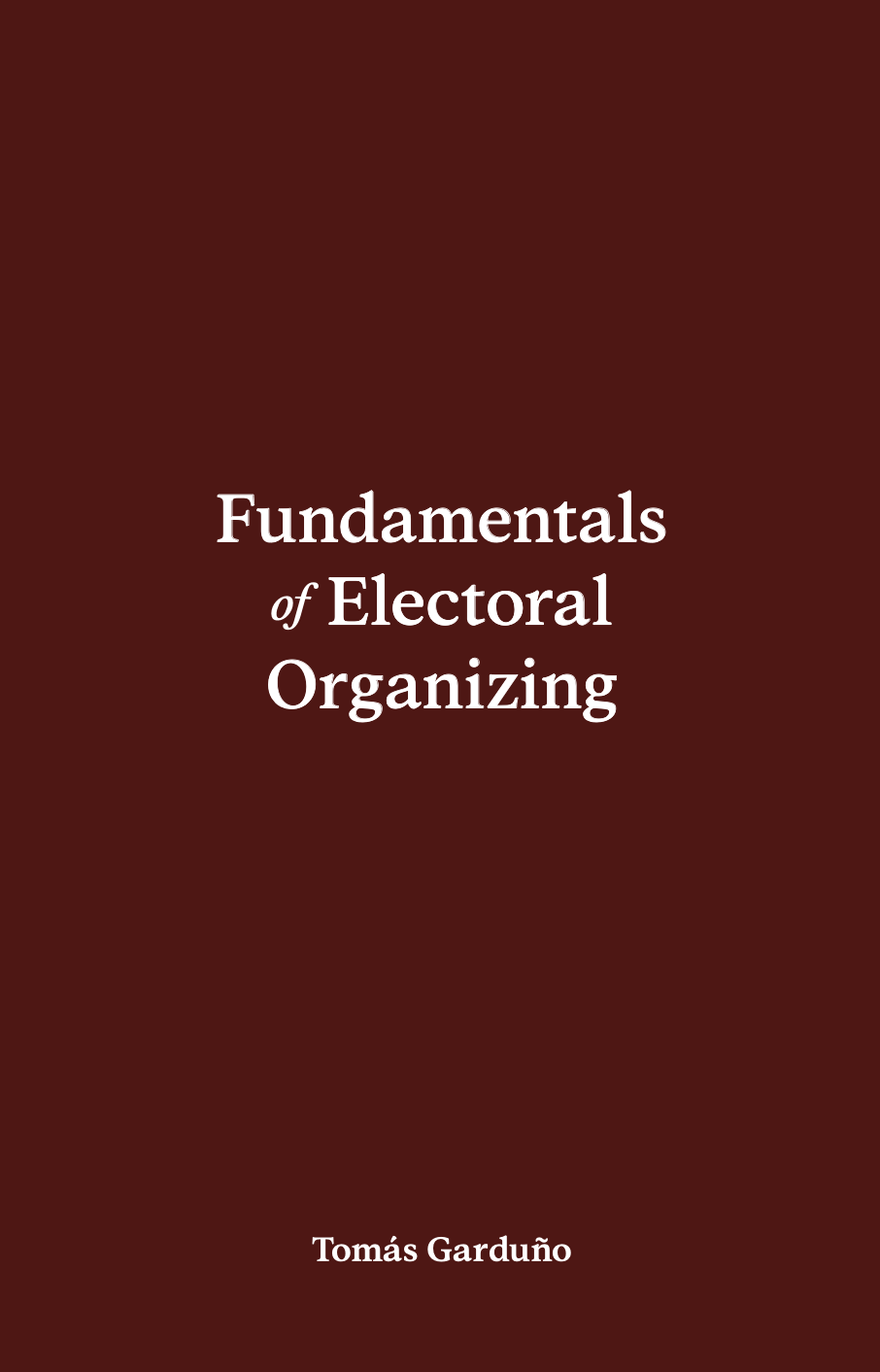
At With Many Hands Leaders Network and Fundamentals of Electoral Organizing, we're not just watching this happen. We're developing working-class people to take leadership roles in political campaigns — as candidates, campaign managers, field directors, data managers, and volunteers — in districts all over the country, including the ones that conventional politics has written off.
The newly drawn maps aren't just a threat. For us, they're an opportunity — a chance to organize working people in districts that have been overlooked, to run candidates who actually reflect the communities they represent, and to build the kind of distributed, grassroots political power that doesn't depend on the Democratic Party or any other institution to give us permission.
We have the tools, the training, and the playbook. What we need is people.
Want to learn more?
Check out our guidebook, operator's manual, digital toolbox, and canvassing app — all built to be accessible and affordable for anyone who wants to build power for working people, their families, their neighbors, their friends and their co-workers. Once you’ve got the tools, learn how to use them by signing up for a workshop or coaching session.
